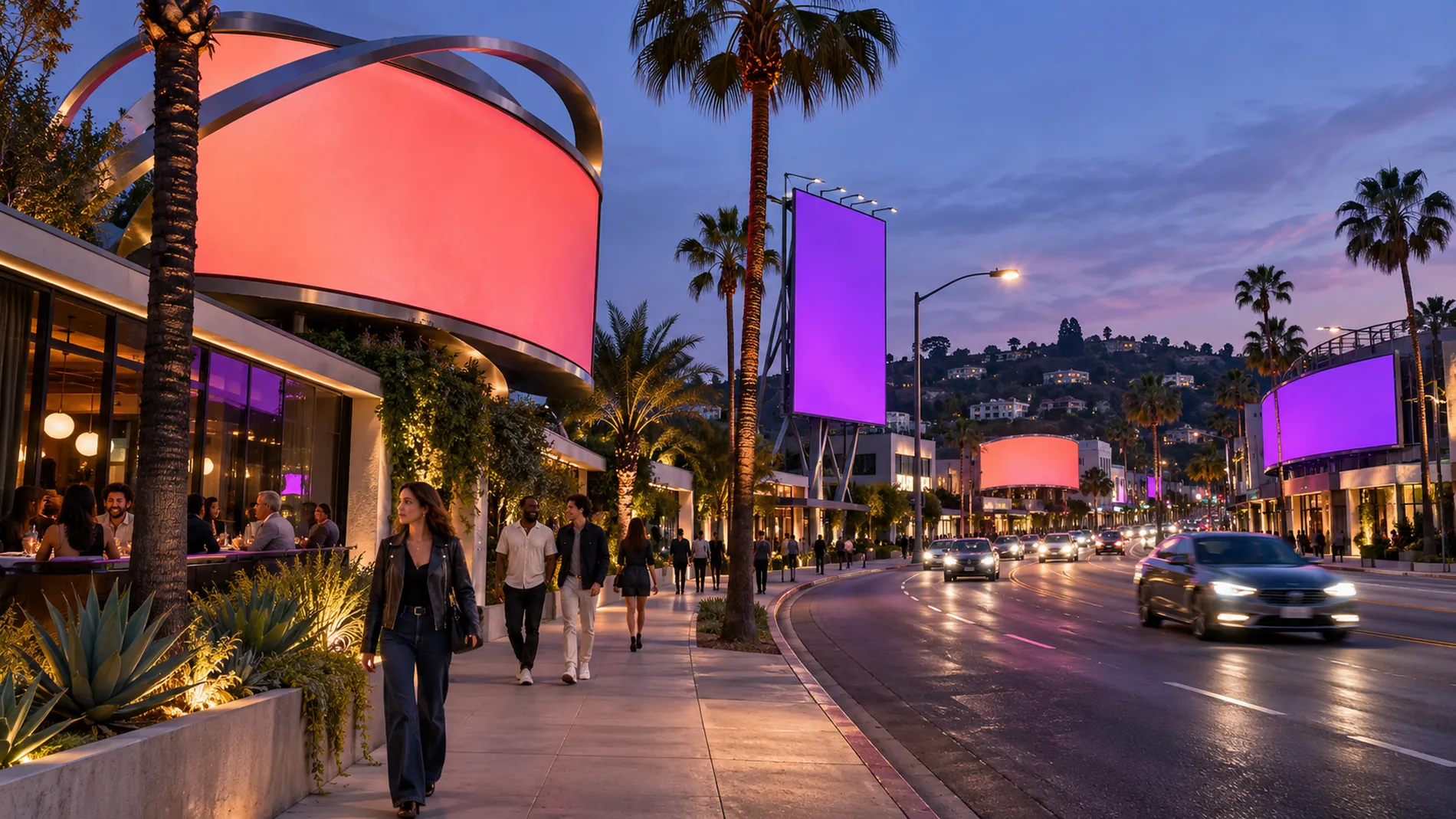
On the Sunset Strip, the view above street level is part of the destination. Large signs compete with building silhouettes, palms, traffic, and the changing light. Some messages disappear after a short campaign; others become part of the way people remember a particular period. Looking up can turn an ordinary walk into an informal study of visual culture.
This does not require photographing every display. Choose a small section of the boulevard, stop somewhere appropriate, and notice how one sign relates to its surroundings. The most useful question is not simply what the advertisement sells, but how it changes the experience of the street.
Understand why signage belongs in the story
The city’s Sunset Arts & Advertising Program describes creative signage as a long-standing part of the Strip’s identity. Its overview traces a shift from painted and printed surfaces toward digital displays and explains the effort to bring art and architecture into that environment. This gives visitors a framework for seeing billboards as designed urban objects, rather than isolated pictures.
Look at the support structure as well as the image. A display might sit above a roof, attach to a wall, or become part of a larger architectural composition. Its relationship with the building can be as visually interesting as the content appearing on the screen.
Compare scale, color, and movement
Start with scale. Does a billboard dominate its block, or does it fit within a broader arrangement of signs? Then consider contrast. A restrained design may stand out among louder neighbors, while saturated colors can either compete with or echo the evening sky. Notice which messages remain understandable from where you are standing.
Digital movement adds another layer. Instead of expecting a single decisive image, watch a complete short sequence from a stationary position. Does the display unfold slowly, change abruptly, or use repetition? Think about how those choices affect attention without assuming that every moving screen is showing art.
Use the city’s public-art information
West Hollywood’s Moving Image Media Art program presents moving-image artworks on participating digital billboards along Sunset Boulevard. The official page provides program context and location information. Check it when planning a visit instead of relying on an old photograph or an outdated exhibition announcement.
An artwork may appear within a broader schedule, so do not assume a screen is malfunctioning if you arrive during commercial content. Equally, a display that looks experimental is not automatically part of the program. Look up the artist and work through the official source when you want to identify what you have seen.
Photograph the streetscape responsibly
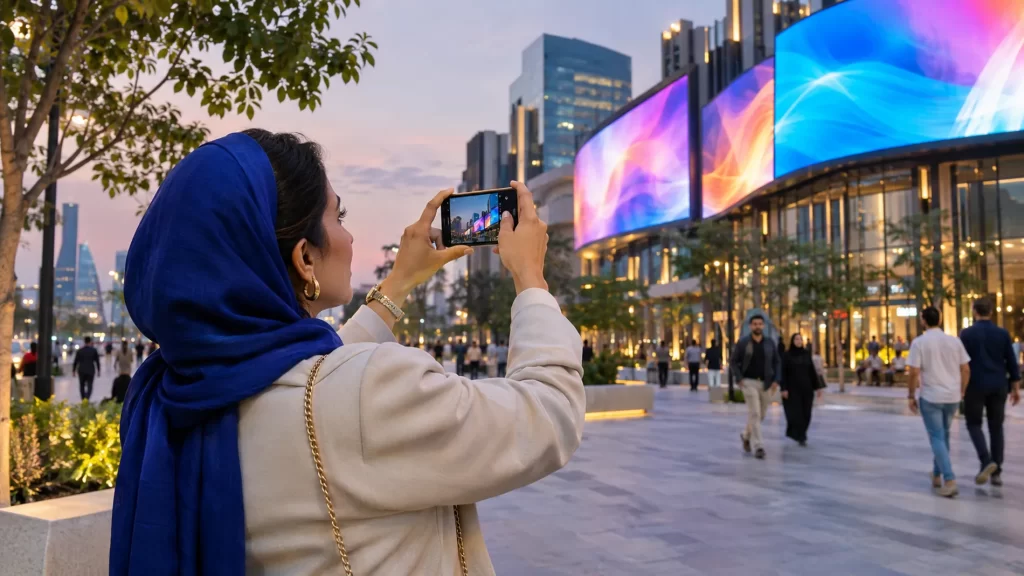
Choose a stable viewpoint on a public pedestrian route where you can pause without obstructing others. Avoid stepping into a driveway or roadway to remove an unwanted object from the composition. A photograph showing the billboard in its actual surroundings often says more than a perfectly isolated image.
Try three approaches: a wide frame showing the building and street, a tighter frame concentrating on the sign’s structure, and a comparison made at another time of day. Be mindful of people who happen to enter the frame. If you later share the image, distinguish your photograph from the artwork or advertisement it contains.
Make the visit about observation, not completion
Billboard content changes, and temporary work is part of the appeal. You do not need a definitive checklist of every current display to enjoy the area. Keep a small record of the date, approximate location, and what attracted your attention. Add the artist or project name only when you have verified it.
Combine this outing with our History & Culture guides for context on the boulevard’s other creative traditions. Our first-visit introduction can help you fit a short visual-culture walk around a meal or performance. Give yourself permission to stop after a few strong observations rather than rushing through a long route.
The reward is a more attentive view of the Strip. You begin to notice that entertainment happens not only inside clubs and restaurants, but also through the surfaces, silhouettes, and changing images that frame the journey between them.