A car-free trip to the Sunset Strip is a collection of smaller journeys: reaching a regional connection, taking the service that brings you closest, and completing the final stretch to your destination. Planning those pieces together is more useful than asking whether one train goes to the Strip. Start with an exact address and a realistic arrival time.
Enter the actual venue, not just Sunset Boulevard
Use the street address on your ticket or reservation. A search for a broad destination can select an inconvenient end of the boulevard or a result outside West Hollywood. Enter the address into Metro’s official rider tools, then check the complete itinerary. Look at the transfer point, final stop, and walking segment rather than only the total travel time.
Set the planning tool to the day and time of your visit. A weekday afternoon journey is not evidence of what will run after a weekend concert. Compare at least one earlier departure if you have a fixed entry time. A modest arrival buffer is especially helpful when you are learning an unfamiliar transfer or meeting people along the way.
Understand the role of the bus connection
Metro’s schedules and maps identify Line 2 as a service via Sunset Boulevard. Use the current map to find the stop that suits your actual destination and to confirm the direction of travel. The existence of a route does not mean every stop will be convenient for every hotel, restaurant, or venue.
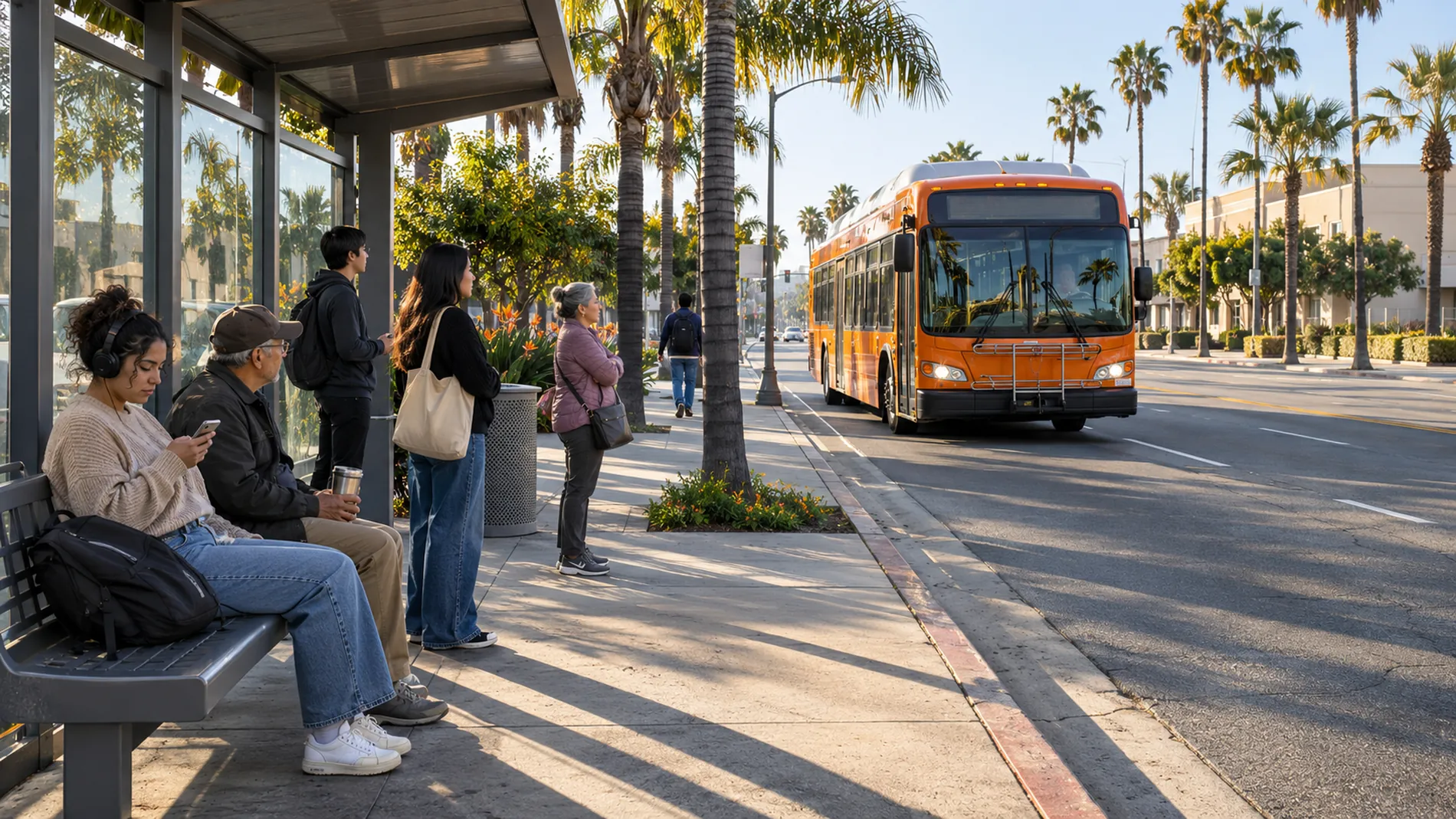
Read the destination displayed on the vehicle and check the stop information before boarding. If you are unsure, ask a clear question about your intended stop. Keep a saved copy of the route details so that a momentary loss of connectivity does not leave you guessing. Familiarity with the street name is helpful, but direction and stop location matter just as much.
Separate regional transit from local shuttles
West Hollywood also publishes information about Cityline’s local and commuter services. These are distinct services with their own routes and operating periods. Read the current map and schedule before treating one as the missing link in your plan. A local daytime service should not be assumed to cover a late-night return.
Think of a shuttle as one possible component, not a promise of door-to-door travel. Check whether the stop sits on Sunset Boulevard or requires a walk from another corridor. If your group has luggage, mobility needs, or limited energy, evaluate that connecting segment with the same care you give the main ride.

Make transfers manageable
Choose an itinerary you can follow calmly. The absolute shortest estimate may involve a tight connection, a confusing station exit, or several changes. A slightly longer trip with fewer decisions can be more comfortable for a first visit. Save the names of transfer stops and identify which side of the street you need before arriving there.
Prepare the payment method described by the operator before you are at the boarding point. Keep your bag compact and leave your hands free when moving through a station or boarding. If traveling with others, agree on what to do if someone misses a connection. A shared plan prevents the group from making conflicting decisions in the moment.
Check the final walking segment
The map may estimate only a few minutes between the stop and the venue, but look at the actual path. Consider crossings, slopes, the correct entrance, and whether you would be comfortable making the same walk after dark. A route that is fine on arrival may be less appealing when you are tired or carrying purchases.
Use our first-visit introduction to keep your activities geographically coherent. A concert, meal, and nearby hotel can create a compact plan, while adding a distant stop changes the transport problem entirely. For alternatives, browse the Getting Around section before deciding that every part of the visit must use the same mode.
Build the return journey separately
Check the service you expect to use after the event, including the connection after your first bus or train. Save a backup option and keep enough battery for the return. Do not assume that reversing the arrival itinerary produces a workable late-night trip. The final connection may be the one that determines when you need to leave.
Review live service information again shortly before departure. If the plan has become uncertain, change it while you still have time and a comfortable place to think. A successful car-free visit depends on a complete return plan, not on proving that every journey can happen without a paid ride.