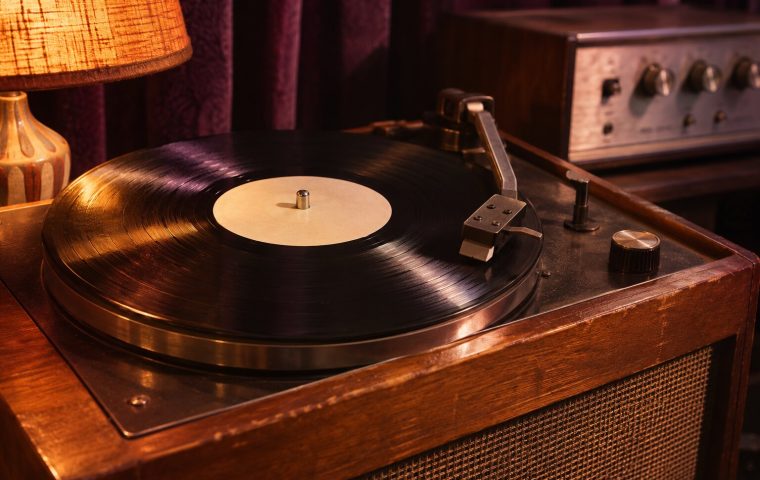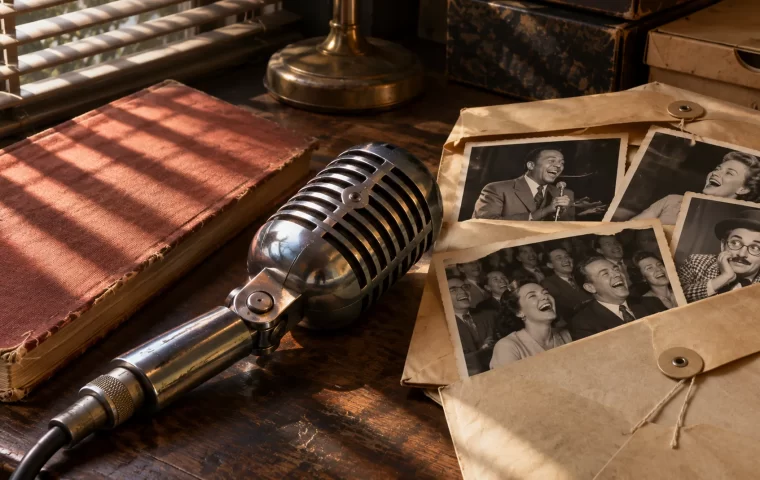
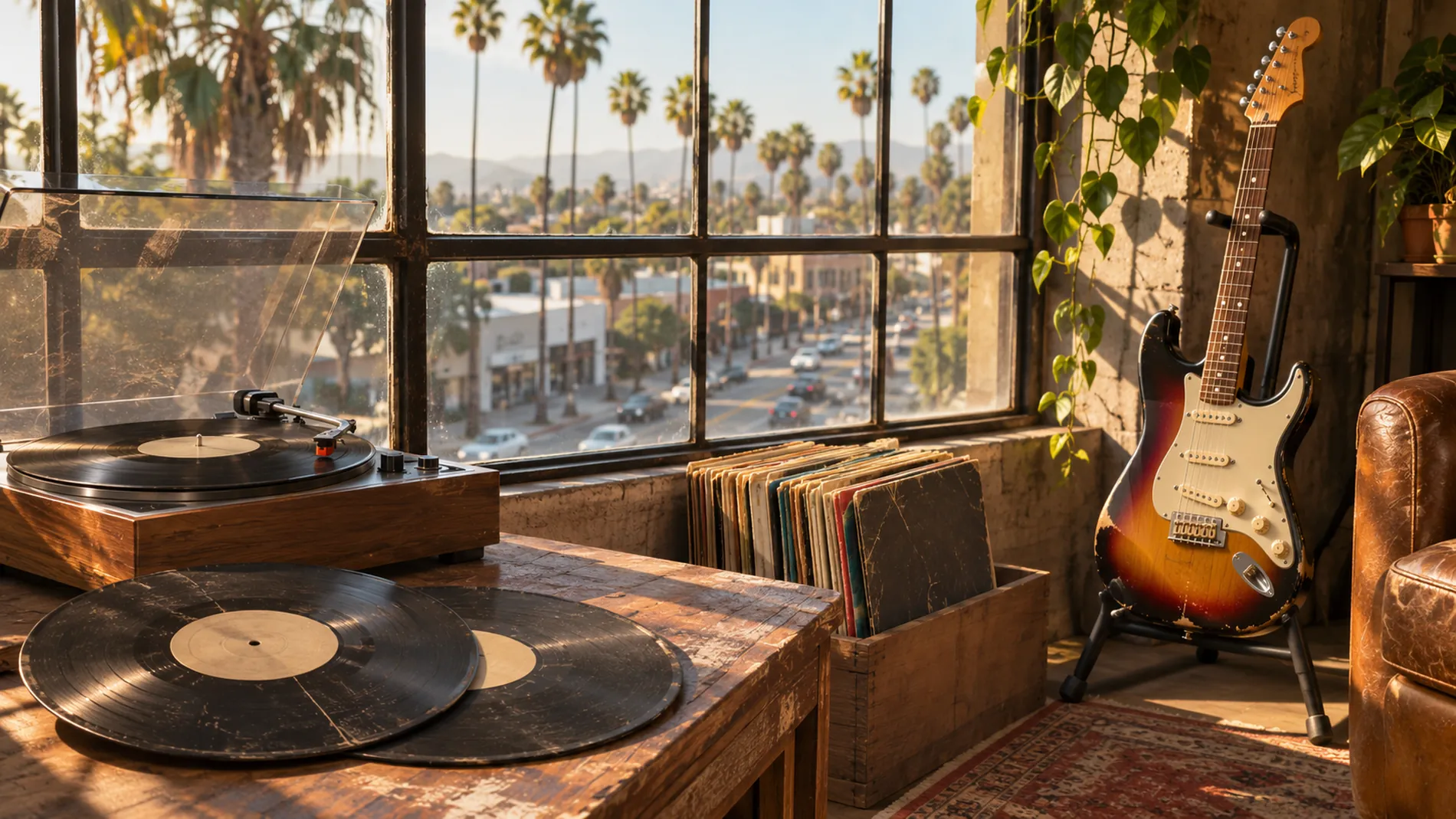
The Sunset Strip’s music history makes more sense when you experience it as a collection of working places. A club can carry decades of associations while selling tickets to an artist you have never heard of. A familiar corner can look different from an album-era photograph. That mixture of continuity and change is part of the appeal, rather than something a visitor needs to resolve.
Build a short outing around a few places that interest you. You do not need to trace every musician, photograph every doorway, or turn one afternoon into a complete history lesson. Choose a musical period, find two or three relevant stops, and leave room to notice the present-day street.
Start with the surviving rooms
The Roxy’s own venue history dates its opening to 1973 and identifies Lou Adler and Elmer Valentine among its founders. Nearby, the Whisky a Go Go belongs to an earlier chapter: West Hollywood’s tourism guide explains its importance to the development of the local rock scene. These are useful anchors because they connect a historical narrative with recognizable destinations.
Before visiting, separate three questions: when did the place become important, what remains visible today, and can you attend something there? A venue’s historical importance does not guarantee public daytime access. An exterior stop and a ticketed performance are different experiences, and each can be worthwhile.
Pick a theme instead of collecting names
A themed walk is easier to remember than a long list of celebrity appearances. You might focus on the relationship between clubs and nearby gathering places, the different scales of performance rooms, or the role of street advertising in promoting music. Let that question shape what you look for.
For example, compare the intimacy suggested by a small entrance with the size of the surrounding boulevard. Notice where queues can form, where people meet before a show, and how a marquee competes with larger signs. These observations do not prove anything about a specific historic concert. They help you understand the physical setting in which music culture developed.
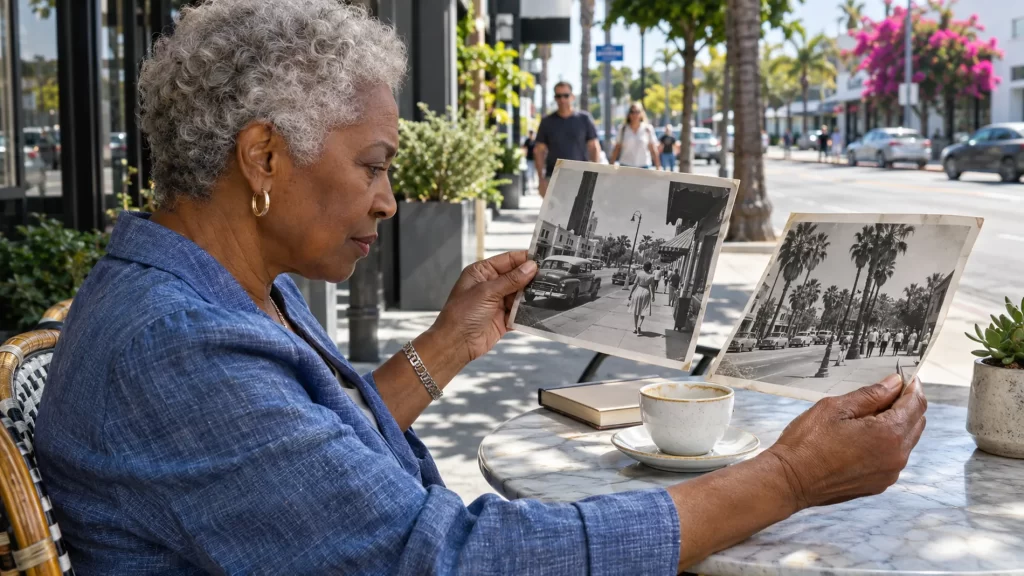
Use photographs as evidence, not a scavenger hunt
When an older photograph catches your attention, record its date, photographer or collection, and precise location. A storefront name alone can be misleading if a business moved. Compare fixed details such as a building corner, hillside position, window pattern, or neighboring intersection before deciding that you have found the same view.
Keep a distinction between the building, the business, and the story attached to it. A surviving structure might have a new use; an enduring venue name might occupy a substantially changed interior. Avoid assuming that everything you see dates from the moment described in an article. A good historical visit can end with a question you want to research later.
Leave time for a current performance
If live music is the main reason for your trip, choose the performance first and fit the history walk around it. Confirm the exact event, admission arrangements, and entry requirements on the venue’s own website. A famous room does not mean every evening offers the same style of music or audience experience.
Our Music & Nightlife guides help connect the historical stops with practical evening planning. Give yourself a meal break and enough time to reach the entrance without rushing. Keep historical exploration away from a congested doorway while ticket holders and staff are working.
Make your own small record of the visit
Take a few exterior photographs from places where stopping will not obstruct pedestrians. Add short notes explaining what interested you: a restored sign, an architectural detail, the scale of a room, or a contrast between two blocks. Keep your impressions separate from researched dates so you can distinguish personal observations from historical claims later.
Finish with one place you would return to and one question to follow up. Browse our History & Culture archive for another angle on the boulevard, rather than trying to exhaust its entire story in one visit. The most rewarding music-history outing leaves you curious about both the recordings made famous here and the people still stepping onto its stages.